FAQ: 2019 Women's Poetry and Pamphlet Competitions
Thank you for your interest in the 2019 Women's Poetry and Pamphlet Competitions! Please read the below carefully before contacting us.
In this section:
- Submission Process
- Previous Publication information
- Format and Style Guides
- Results
1. Submission Process
How do I submit?
The best way to submit is via Submittable. You must make an account with your email and contact information and then submit via the relevant form by uploading the relevant documents and processing payment. Click here to submit single poems and here to submit a pamphlet.
You can also submit via the phone or by post. To submit via phone, you will need to be able to send files via email. Call +44 (0) 191 230 8100 to pay over the phone. We will go through the details in the form with you, and you will be sent an email prompt to send us your work. You must send this to us before the competition deadline of 5pm GMT, 16th September 2019, to be considered.
You can submit via post by printing off this submission form and sending it completed to us at Poetry Book Society, Milburn House, Dean Street, Newcastle upon Tyne, NE1 1LF, UK. The form will give further details about this process.
Can I pay now and submit later?
When submitting online, payment and file submission occurs at the same time. Postal submissions must include payment and the submission at the same time to make sure these are linked together and the submission is successful. We advise phone entrants to only pay when your work is ready to submit.
The upload is not working, what should I do?
Please ensure that the file is saved as a word document, in .doc or .docx format, or as a PDF.
Will I receive a confirmation email once I have uploaded my entry via the upload form?
Yes, you will be sent an automated confirmation email. If you haven’t received this email, please check your spam.
Will I receive delivery confirmation for postal submissions?
If you wish to be notified of delivery, please include a pre-written, pre-stamped, and pre-addressed postcard or letter in a postal submission. We will post this to you on receipt. Unfortunately if it does not have all of these details and postage included we will not return this to you.
What do I do if I’m unsure my entry has arrived safely?
Please don’t submit the same poems multiple times if you think the entry has not gone through. If you think something has gone wrong with the upload, please get in touch and we’ll check for you.
I want to enter both the pamphlet and poetry competitions. What do I do?
You can enter both competitions as separate submissions. Please ensure your submissions go through the correct categories.
I have forgotten which poems I submitted. What do I do?
If you submit via the online Submittable platform you will have a record of your entries when you look at your account. If you have submitted via post we will record this information when we come to process your entry and can investigate for you at that point.
Can I send my entry recorded delivery?
We can receive post sent by recorded delivery to our office. It will be accepted and signed for by our office reception.
Will someone be there to accept my postal entry at the weekend?
Unfortunately not, as our office is closed during the weekend.
I submitted long before the deadline but my cheque hasn’t been cashed yet.
Submissions via post will be processed in batches, so there may be some delay in us cashing your cheque.
I am entering both the pamphlet and poetry competitions by post, should I send separate cheques?
We would prefer it if you write two separate cheques in this instance.
Will my poems be returned to me?
Submissions will not be returned, so please keep a copy.
I am having problems with my Submittable account (including registering and payment), what do I do?
Submittable is a third-party platform which hosts the submission form, accounts and payment process. Please contact their help centre directly for any issues with the service.
Do I have to subscribe to Mslexia to enter, or be a Poetry Book Society member?
You do not have to subscribe/be a member to either of these organisations to submit, but we would love for you to receive our mailings! Find out more about PBS membership options here and the Mslexia magazine here.
Can I submit collaborative work or work by multiple poets?
Only poems or pamphlets by a single author can be entered.
I’m a man, can I submit?
We’re sorry but we do not accept submissions from men. This prize was founded by Mslexia to provide a platform for women writers. If you’d like to read more about Mslexia's reasoning, please read the two articles here.
2. Previous Publication Information
Can I submit published work?
You cannot submit published work to the Poetry Competition.
Individual poems within your submission to the Pamphlet Competition may have been previously published in magazines or anthologies. They may not have been previously published in your own pamphlet or full collection, and the pamphlet as a whole must not have been previously published.
I have had other work published before. Does that mean I can submit?
Poets who have previously had a full collection published cannot submit to the pamphlet competition. Otherwise, you're good to go!
What counts as 'published'?
If a poem has been published, or accepted for publication, in any print or online format by a third party (a business, publisher, or other organisation or individual other than yourself) then it counts as published. If you self-published your work for commercial purposes, such as via Amazon, or for sale on any platform, this also counts as published.
I uploaded this poem to my blog/website/social media, does this count as published?
No. If they were not selected by a third party and were not for commercial use, they are not considered published. If a third party then selects them for official promotion or inclusion on a website or other format, however, this does count as published.
My poems were published a long time ago and they have changed since then. Does this count as published?
Yes.
My poems have been published in another country (or in another language). Does this count as published?
Yes.
I self-published my pamphlet, can I still submit?
Your pamphlet will not be eligible, as per the terms and conditions. This is because publication is part of the prize.
I have previously had a pamphlet published. Can I submit to the pamphlet competition?
As long as it is not the same one you are entering, and you have not had a full collection published too, of course!
What counts as a full collection?
A work by a single author of more than 48 pages of poetry.
My work has received prize/payment in another competition, can I enter?
You cannot submit poetry which has already received another award or prize.
Do you accept simultaneous submissions?
Yes. However, if within the duration of our competition you are shortlisted or selected for another prize with the same work, it must be removed from our competition.
I have had work other than poetry published before. Am I still eligible for the Unpublished Prize?
As long as you've never had poetry published before, you are eligible for this prize.
3: Format and Style Guides
How should I present my poems?
Poems should be typed clearly on white A4 paper with black font, with a title at the start of the poem. If the document runs over more than 1 page, these should be numbered. Do not include your name within the document, or in the file name if submitting online.
What font, size and spacing should I use?
Use a clear, standard font like Times, Arial, Calibri, Cambria or similar in sizes 11 or 12. Only use capitalisation, underlining and bold where the poem requires it. Use single spacing between lines (unless stylistically important).
What counts as pages of poetry or lines of poetry?
Only pages containing poems, or actual lines of poetry, are counted in these instances. Blank spaces and contents pages are not included in the page count.
I have a poetry sequence. Is this one poem or multiple poems?
If it is more verses of an extended sequence of which the parts should not stand on their own as poems, then this can be considered one poem. If it is a set of interlinked poems with different titles, this is considered to be multiple poems.
Are the 24 pages and 20 poems rules for pamphlets a hard limit?
Yes. You may have fewer than 24 pages and fewer than 20 poems, though we encourage you to have between 20 and 24 pages. You may not go over either number.
Can I submit pamphlets from multiple authors? For instance, a mini-anthology from friends or colleagues?
No, this is for a single author.
Should I staple postal submissions?
No. Postal submissions should be paperclipped, within a plastic wallet, or loose, with numbered pages to make the scanning process easier.
Can I print on both sides of the paper?
Yes, this is not a problem for our scanner.
Should I start poems on new pages?
Yes.
When submitting online, do I have to upload each of my poems as separate attachments?
For the Poetry Competition, you should upload the poems as separate documents. If a single poem goes over multiple pages, upload these pages as one document with page numbers.
For the Pamphlet Competition, please submit one document with numbered pages.
I’ve accidentally left my name on my entry, what do I do?
Please email us here.
I’ve made changes to my poem, or changed the title, since submitting my entry to the competition. Can I send a replacement?
No alterations may be made to poetry or pamphlet collections after they are submitted, as per our terms and conditions.
I’ve noticed a major error in my entry after I’ve uploaded it, what do I do?
Please email us here. We will not allow corrections for typos and other minor errors, but if for example you upload the wrong file we can amend this. Please proof-read your submission carefully before submitting.
4: Results
What time is the deadline?
17.00 GMT, 16th September 2019. If you live outside of the UK, please make sure your entry reaches us based on GMT.
Will I be notified of the outcome of my entry?
Winners will be contacted by post (and email, if applicable) in November 2019 for the poetry competition and February 2019 for the pamphlet competition. We will endeavor to contact all unsuccessful entries before this. Please do not email us to ask if you have won. We will let you know if you do!
Will the winners’ names be published online?
Yes, both the PBS and Mslexia will announce the winners online as well as in print. We may also ask winners for a promotional image and biography at the point of notifying them of their success.
Will shortlists be published online?
The names of the 17 finalists, first, second and third prize winners, and unpublished prize winner for the poetry competition will be published online. The sole winner of the pamphlet competition will be published online.
When can I submit the same poems to another competition?
Simultaneous submissions are allowed, but if you wish to play this safe you should wait until December 2019 for the Poetry Competition, or March 2020 for the Pamphlet competition.
My Submittable account still says 'In Progress' (or similar). What does this mean?
If you have not been contacted by the end of November 2019 for the Poetry Competition or the end of February 2020 for the Pamphlet Competition, unfortunately your submission has not been successful. We will attempt to keep Submittable more neat and tidy for submitters this year, as we know it caused confusion last time!
If you cannot find your question or something still is not clear, please contact us by email here, or by phone on +44 (0) 191 230 8100.
Click here to return to the main page.
ABOUT
The Poetry Book Society received 241 submissions from poetry publishers. The judging panel comprised poets Ian McMillan (Chair), Caroline Bird, Robert Crawford, representing New Generation Poets, Paul Farley, representing Next Generation Poets, and Clare Pollard. The judges selected poets who had published their first collection during the decade from 1st May 2004 to 30th April 2014.
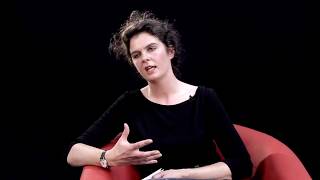
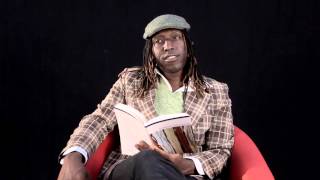
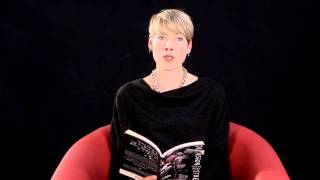
The campaign set out to build the visibility and audiences of these poets, with a particular focus on reaching new readers. It included a national media campaign, a dedicated website featuring video interviews, poems, discussions and blogs, as well as a reading group scheme with discussion notes, poems and a competition.
2014 POETS

Tara Bergin
Tara Bergin was born and grew up in Dublin. She moved to England in 2002 and currently lives in North Yorkshire. In 2012 she completed her PhD research at Newcastle University on Ted Hughes’s translations of János Pilinszky. Her poems have been published in Poetry London, Poetry Review, Modern Poetry in Translation and Poetry Nation Review, as well as in Carcanet’s anthology New Poetries V. She was awarded the Seamus Heaney Prize for Poetry in 2014. This is Yarrow (Carcanet) is her first collection.

Emily Berry
Emily Berry grew up in London and studied English Literature at Leeds University and Creative Writing at Goldsmiths College. She works as a freelance writer and co-edits the
anthology series Stop Sharpening Your Knives and is a contributor to The Breakfast Bible, a compendium of breakfasts published by Bloomsbury. In 2008 she received an Eric Gregory Award and her first pamphlet stingray fevers was published by tall lighthouse. Dear Boy (Faber) was awarded the 2013 Forward Prize for Best First Collection.

Sean Borodale
Sean Borodale works as a poet and artist, making scriptive and documentary poems written on location; this derives from his process of writing and walking for works such as Notes for an Atlas (Isinglass, 2003) and Walking to Paradise (1999). He was selected for the Granta New Poets series in 2012 and his first collection of poetry, Bee Journal (Jonathan Cape, 2012), was a PBS Recommendation and was shortlisted for the T S Eliot Prize. His second collection, Human Work, is published in February 2015 by Jonathan Cape.

Adam Foulds
Adam Foulds was born in London and studied English at St. Catherine’s College, Oxford and Creative Writing at the University of East Anglia. He is a poet and novelist and lectures in Creative Writing at the University of Roehampton. In 2008, his first collection The Broken Word (Jonathan Cape) won the Costa Poetry Prize and the Somerset Maugham Award. His novel The Quickening Maze was shortlisted for the 2009 Man Booker Prize and won the European Union Prize for Literature. He was named as one of Granta’s ‘Best of Young British Novelists’ in 2013.

Annie Freud
Annie Freud was born in London in 1948. Her father is the painter, Lucian Freud. Her maternal grandfather was the sculptor, Sir Jacob Epstein, and her great-grandfather was Sigmund Freud. Her first publication was A Voids Officer Achieves the Tree Pose (Donut
Press). Her first full collection, The Best Man That Ever Was (Picador, 2007), was a Poetry Book Society recommendation and won the Dimplex Prize for New Writing (Poetry) in the same year. The Mirabelles was a PBS Choice and shortlisted for the T S Eliot Prize in 2010. She is currently teaching at the Poetry School.

Alan Gillis
Alan Gillis was born in Belfast and lives in Scotland where he is Lecturer in English at The University of Edinburgh. His debut collection, Somebody, Somewhere, won the Rupert and Eithne Strong Award for Best First Collection in 2004, and was shortlisted for the Irish Times Poetry Now Award. His second collection Hawks and Doves was a Poetry Book Society Recommendation in 2007 and was shortlisted for the T S Eliot Prize. Here Comes the Night was published by Gallery Press in 2010, and his fourth collection, Scapegoat, is published by Gallery Press in October 2014.

Rebecca Goss
Rebecca Goss was born and grew up in Suffolk. She has an MA in Creative Writing from
Cardiff University and taught Creative Writing at Liverpool John Moores University for
several years. Her first collection The Anatomy of Structures was published in 2010 by
Flambard Press. Her second collection Her Birth (Carcanet) was shortlisted for the 2013
Forward Prize for Best Collection. She is now a full-time writer and lives in Suffolk.

Jen Hadfield
Jen Hadfield lives in Shetland where she works as a poet and writing tutor. Her first collection Almanacs (Bloodaxe, 2005) was written in Shetland and the estern Isles in 2002. Her second collection, Nigh-No-Place (Bloodaxe), won the T S Eliot Prize in 2008.
She won the Edwin Morgan Poetry Competition in 2012, and her most recent collection is Byssus (Picador, 2013).

Emma Jones
Emma Jones was born in Sydney, Australia and studied at the universities of Sydney and Cambridge. Her first book, The Striped World, was published in 2009 and won the Forward Prize for Best First Collection, the Queenslan Premier's Literary Award for Best Collection and was shortlisted for the John Llewellyn Rhys Prize. In 2009-10 she was poet in residence at the Wordsworth Trust.

Luke Kennard
Luke Kennard is a poet and writer of fiction. He won an Eric Gregory award in 2005 for his first collection of prose poems, The Solex Brothers (Stride Books), and his second collection of poetry, The Harbour Beyond the Movie (Salt, 2007), made him the youngest poet ever to be nominated for the Forward Poetry Prize for Best Collection. His criticism has appeared in Poetry London and The Times Literary Supplement, and his first fiction publication, Holophin (Penned in the Margins, 2012), won the Saboteur Award for Best Novella 2013.

Melissa Lee-Houghton
Melissa Lee-Houghton was born in Wythenshawe, Manchester in 1982. Her first collection, A Body Made of You, was published by Penned in the Margins in 2011, and Beautiful Girls was published in 2013 and was a PBS Recommendation. Her poetry and short fiction have been published in literary magazines such as Poetry Salzburg, The New Writer, Magma and Tears in the Fence. Her poem, ‘Jim’, was included in Starry Rhymes, a chapbook published by Read This Press. She is a regular reviewer for The Short Review.

Hannah Lowe
Hannah Lowe was born in Essex in 1976 to an English mother and Chinese-Jamaican father. Chick (Bloodaxe, 2013) is her debut collection and was shortlisted for the Forward and Fenton Aldeburgh First Collection Prizes and the Seamus Heaney Centre Prize for Poetry. She has followed this with two pamphlets, R x in 2013 and Ormonde in 2014. She is studying for a PhD in Creative Writing and her family memoir Long Time, No See will be published by Garnet Press in January 2015.

Kei Miller
Kei Miller was born in Jamaica in 1978. He read English at the University of the West Indies and completed an MA in Creative Writing at Manchester Metropolitan University. His poetry collections include Kingdom of Empty Bellies, (Heaventree Press, 2006) and There Is an Anger That Moves (Carcanet, 2007). He is also the editor of Carcanet's New Caribbean Poetry: An Anthology. He has been a visiting writer at York University in Canada and currently teaches Creative Writing at the University of Glasgow.

Helen Mort
Helen Mort was born in Sheffield in 1985. She has published two pamphlets with tall lighthouse press, the shape of every box and a pint for the ghost, a Poetry Book Society Pamphlet Choice for Spring 2010. Five-times winner of the Foyle Young Poets award, she
received an Eric Gregory Award from The Society of Authors in 2007 and won the Manchester Young Writer Prize in 2008. Division Street, Helen’s first collection, published by Chatto & Windus in 2013, was a PBS Recommendation and was shortlisted for the T S Eliot Prize.

Daljit Nagra
Daljit Nagra was born and raised in West London, then Sheffield, and currently lives in London where he works as a teacher. His first collection, Look We Have Coming to Dover!, won the 2007 Forward Prize for Best First Collection and was shortlisted for the Costa Poetry Award. In 2008 he won the South Bank Show/Arts Council Decibel Award. His second collection, Tippoo Sultan’s Incredible White-Man-Eating Tiger Toy-Machine!!!, was shortlisted for the T S Eliot Prize in 2011.

Heather Phillipson
Heather Phillipson received an Eric Gregory Award in 2008, a Donut Press mentoring award and a Faber New Poets Award in 2009. Her first collection, Instant-Flex 718, was published by Bloodaxe in 2013 and was shortlisted for the Fenton Aldeburgh First Collection Prize. Her text Not An Essay was published by Penned in the Margins in 2012. As an artist, Phillipson exhibits nationally and internationally, including solo shows at the Serpentine Gallery, the ICA and the BALTIC in the UK, and Bunker 259 in New York, as well as being featured on Channel 4’s Random Acts.

Kae Tempest
Kae Tempest is a poet, lyricist, performer and recording artist. He has published plays, poems, a novel, a book-length essay, released albums and toured extensively, selling out shows from Reykjavik to Rio de Janeiro. He received Mercury Music Prize nominations for both of the albums Everybody Down and Let Them Eat Chaos, and two Ivor Novello nominations for his song-writing on The Book of Traps and Lessons. He received the Ted Hughes Award for his long-form narrative poem Brand New Ancients and the Leone D’Argento at the Venice Teatro Biennale for his work as a playwright.

Mark Waldron
Mark Waldron was born in New York and grew up in London, and began writing poetry in his early 40s. His first book, The Brand New Dark was published by Salt Publishing in 2008 and his second, The Itchy Sea, came out in September 2011, which were followed by three from Bloodaxe, Meanwhile, Trees (2016), Sweet, like Rinky-Dink (2019) and A Straight Up Giant (2023). His work appears in Identity Parade: New British and Irish Poets (Bloodaxe, 2010) and Best British Poetry 2012 and 2013 (Salt). He lives in London with his wife and son.

Sam Willetts
Sam Willetts read English at Wadham College, and worked as a teacher, journalist and travel writer but became addicted to heroin at the age of 37. His debut collection, New Light for the Old Dark (2010), was shortlisted for the Forward Prize, the Costa Prize and the T S Eliot Prize, and contains poems about the years he spent homeless and addicted to heroin. Now free of drugs, his work covers everything from his mother's plight in the Holocaust to his childhood in Oxfordshire.

Jane Yeh
Jane Yeh was born in America and educated at Harvard University. Her chapbook, Teen Spies, was published in 2003 by Metre Editions. Her first full-length collection, Marabou, was published by Carcanet in 2005 and shortlisted for the Whitbread, Forward, and Aldeburgh Festival poetry prizes. She has been the recipient of an Academy of American Poets Prize and a New York Foundation for the Arts Fellowship. She lives in London and lectures in Creative Writing at Kingston University.
THE 2014 GENERATION TOUR
Between October 2014 and March 2015, the 20 winning poets appeared at 23 events in festivals, libraries, arts venues, and bookshops across the country. The promotion culminated in a major celebration at the Southbank Centre’s Queen Elizabeth Hall in London in March 2015. Next Generation Poets 2014 also had an international dimension. The Poetry Book Society collaborated with the British Council on an international showcase of contemporary British poetry featuring the 20 poets, with readings, conversations and workshops taking place in countries including Bangladesh, India and Brazil from 2015 onwards.
NGP 2014 was supported by Arts Council England Grants for the Arts and the T S Eliot Estate, which funded the programme as part of a year of support for poetry marking the 50th anniversary of T S Eliot’s death in January 2015.
2014 JUDGES

Ian McMillan
(Chair) Poet
Ian McMillan has worked in schools, theatres, arts centres, fields and front rooms. He’s poet-in-residence for English National Opera, The Academy of Urbanism and Barnsley FC. Previously he was UK Trade & Investment’s Poet, Yorkshire TV’s Investigative Poet and Humberside Police’s Beat Poet. He presents The Verb every week on BBC R3 and he’s a regular on Coast, Pick of the Week, You & Yours, Last Word and The Arts Show. He was recently castaway on Desert Island Discs. Ian currently tours with his acclaimed verse autobiography Talking Myself Home and The Ian McMillan Orchestra, which featured on The South Bank Show and at BBC Proms Plus.

Caroline Bird
Poet
Caroline Bird, who was born in 1986, was a winner of the Simon Elvin Young Poets of the Year Award in 1999 and 2000, and the Peterloo Poets Competition for Young Poets in 2002, 2003 and 2004. Her first collection, Looking Through Letterboxes, was published by Carcanet in 2002; her second collection, Trouble Came to the Turnip, appeared in 2006. Watering Can (2009) was a PBS Recommendation, and her most recent collection The Hat-Stand Union was published in 2013. She was shortlisted for the Geoffrey Dearmer prize in 2001 and won a major Eric Gregory Award in 2002.

Clare Pollard
Poet
Clare Pollard was born in 1978, and studied at Cambridge University. Her first poetry collection, The Heavy-Petting Zoo, was published in 2000 and her second collection, Bedtime, was published in 2002. Her collections of poetry include Look, Clare! Look! (2005), Changeling (2011) and a translation of Ovid’s Heroines (2013). In 2009 she edited an anthology of new poetry with James Byrne: Voice Recognition: 21 Poets for the 21st Century (2009). Clare Pollard lives in London and is a Royal Literary Fund Fellow at Essex University.

Paul Farley
Poet
Paul Farley was born in Liverpool in 1965. His first collection of poetry, The Boy from the Chemist is Here to See You (1998), won the Forward Poetry Prize for Best First Collection. He was first shortlisted for the T S Eliot Prize in 2002 for The Ice Age, which also won the
Whitbread Poetry Award in 2003. He has written widely for BBC Radio and his
book of non-fiction, Edgelands: Journeys
into England’s Last Wilderness (2010), written with Michael Symmons Roberts, won the Jerwood Prize for Non-Fiction. His fifth collection, The Dark Film, was shortlisted for the T S Eliot Prize in 2012, and his Selected Poems was published in 2014 by Picador. A 2004 Next Generation Poets finalist.

Robert Crawford
Poet
Robert Crawford is a poet and critic, born in Lanarkshire, Scotland in 1959. He has been the author of six collections of poetry since his first in 1990, four of which have been Poetry Book Society
Recommendations. As a scholar he works as the Professor of Modern Scottish Literature at the University of St Andrews and as published several volumes of literary criticism on Scottish literature and poetry. He has twice won a Scottish Arts Council Book Award, and his last collection, Full Volume, was shortlisted for the T S Eliot Prize in 2008. His latest collection is Testament (Jonathan Cape). A 1994 New Generation Poets finalist.
THE NGP LEGACY
Looking back from 2026, Next Generation Poets 2014 forms an important part of the Poetry Book Society’s continuing tradition of identifying and celebrating emerging poets. As with the 1994 and 2004 generations before them, many of the poets selected in 2014 have gone on to make a significant contribution to contemporary poetry, demonstrating the lasting impact of the Next Generation Poets programme.
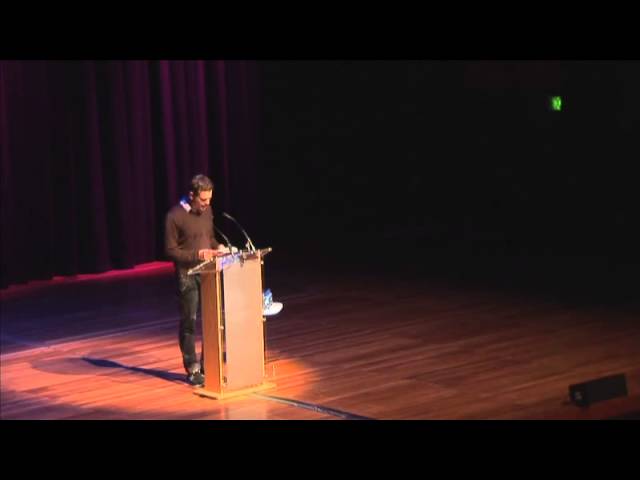
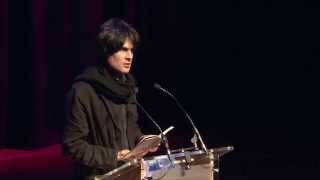
Head to the Poetry Book Society YouTube channel to view more readings and interviews from the 2014 archive.